Metal Filter Factory Capabilities for Custom OEM Components
METAVOX is an industrial metal filter manufacturer with its own factory and production equipment. Our factory manufactures custom metal filtration components for OEM equipment makers, industrial filter brands, distributors and engineering procurement teams. We review powder-sintered, bonded wire-mesh, metal fiber-felt and fabricated filter elements against each customer’s drawing, sample and service conditions.
Our core service is drawing-based custom manufacturing, not selling a fixed set of stock cartridges. Share the product geometry and filtration duty; our factory engineering review covers material grade, porous-media construction, connections, pressure, temperature, manufacturing route, inspection requirements and order quantity before production feasibility and quotation are confirmed.

Custom metal filter manufacturing processes and equipment
A cylindrical sintered powder element and a pleated stainless-steel mesh cartridge do not share the same media, joint or inspection requirements. We begin with the filtration task and installation interface, then review a practical production route.
Sintered powder metal
Porous stainless-steel, bronze and other reviewed metallic structures in discs, tubes, plates, cartridges and custom forms. Filtration grade and finished-part geometry are assessed together.
Sintered wire mesh
Multi-layer mesh media, formed cylinders and cartridges where layer construction, edge treatment, joints and mechanical support matter.
Metal fiber felt
Metal fiber media and pleated constructions selected around filtration duty, permissible pressure loss and intended cleaning method.
Custom stainless assemblies
Drawing-controlled welded or formed filter elements, connection interfaces, end fittings and special housing-fit requirements.
Replacement element review
Use an existing filter drawing or sample to compare geometry, media, connections and process duty. A physical match alone does not prove performance equivalence.
Factory RFQ evaluation
Materials, dimensions, media rating, operating conditions, sample quantity and inspection needs are reviewed before quotation.
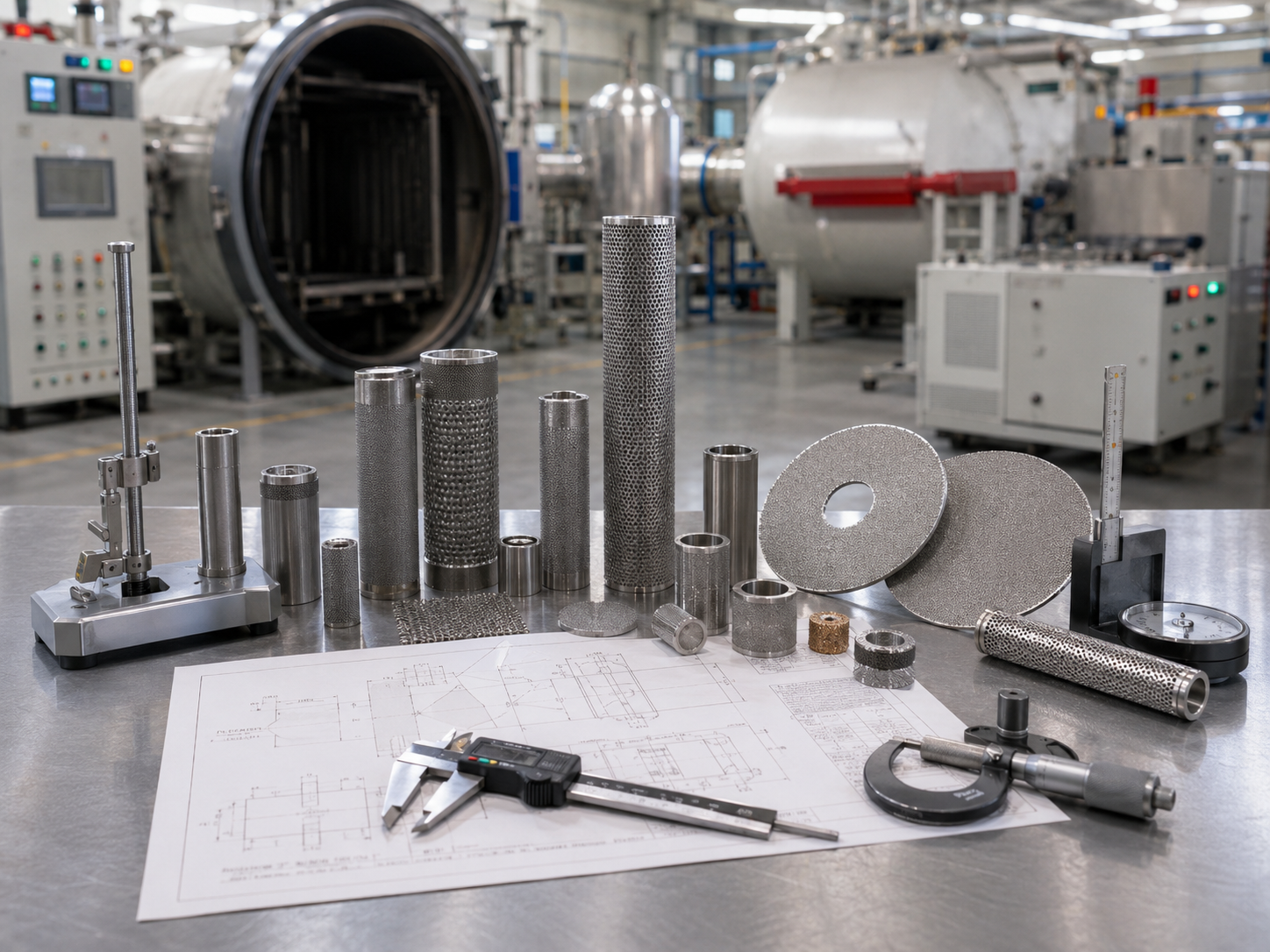
Our Factory Workshop, Sintering Equipment and Inspection Areas
The photographs here show METAVOX’s own metal filter factory workshop, vacuum sintering equipment and inspection work areas. These are our manufacturing-capability evidence assets, not stock product listings. Manufacturing methods, equipment use, material choice and acceptance testing must still be selected and documented for each custom filter design. An equipment photograph does not constitute a material certificate or a finished-part performance test.
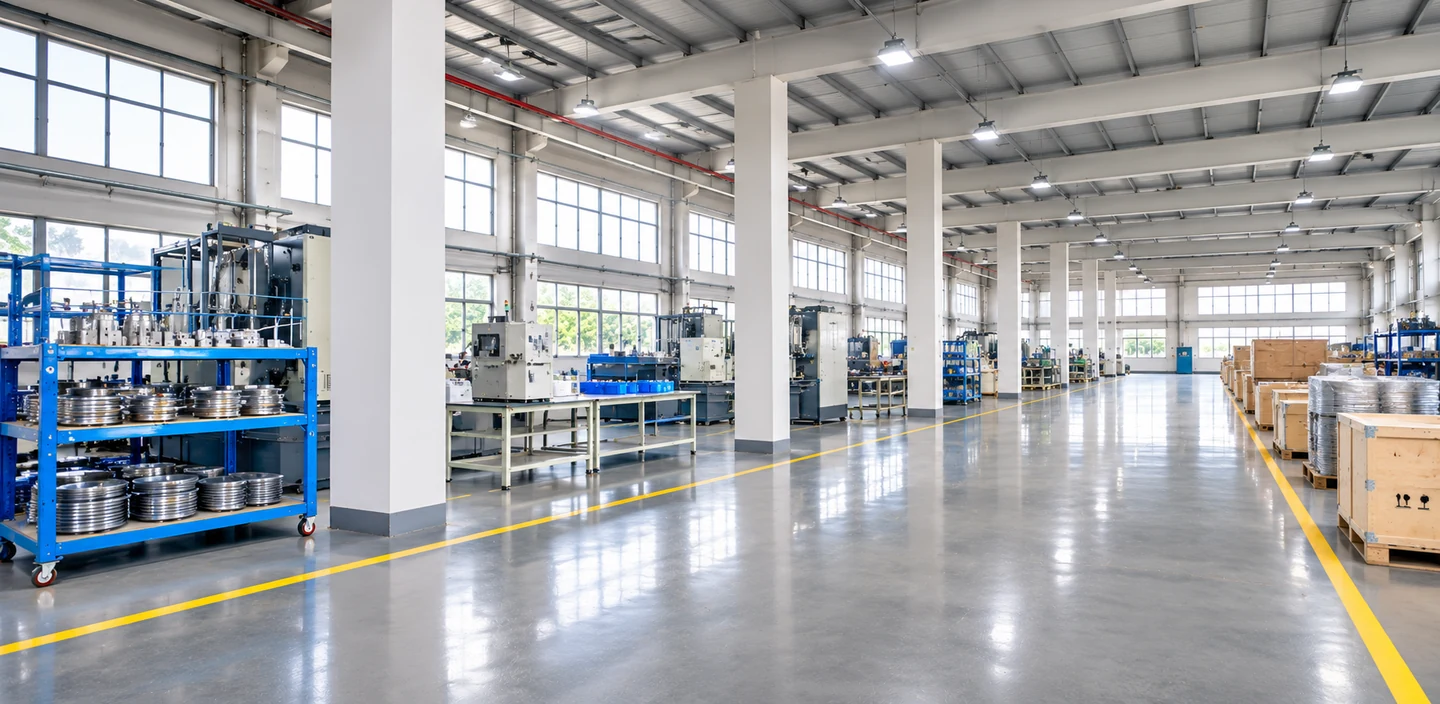
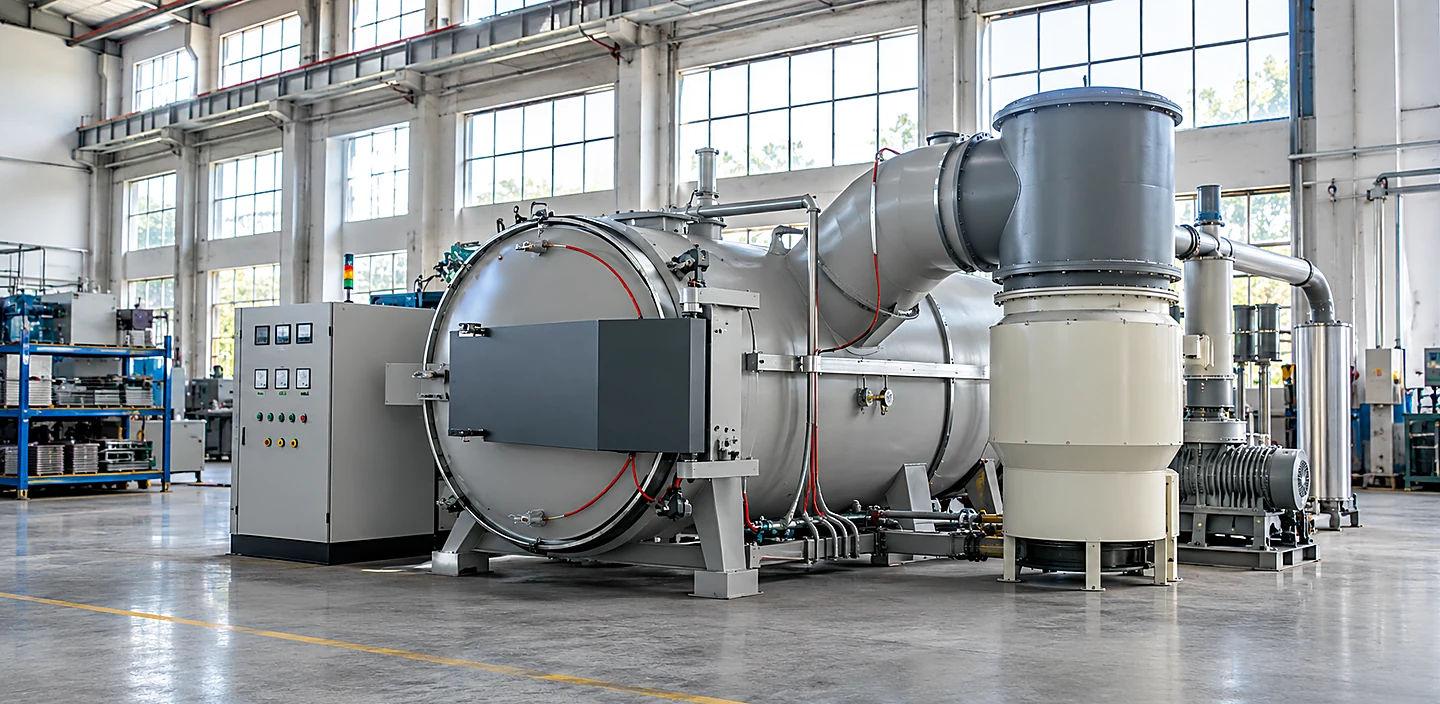
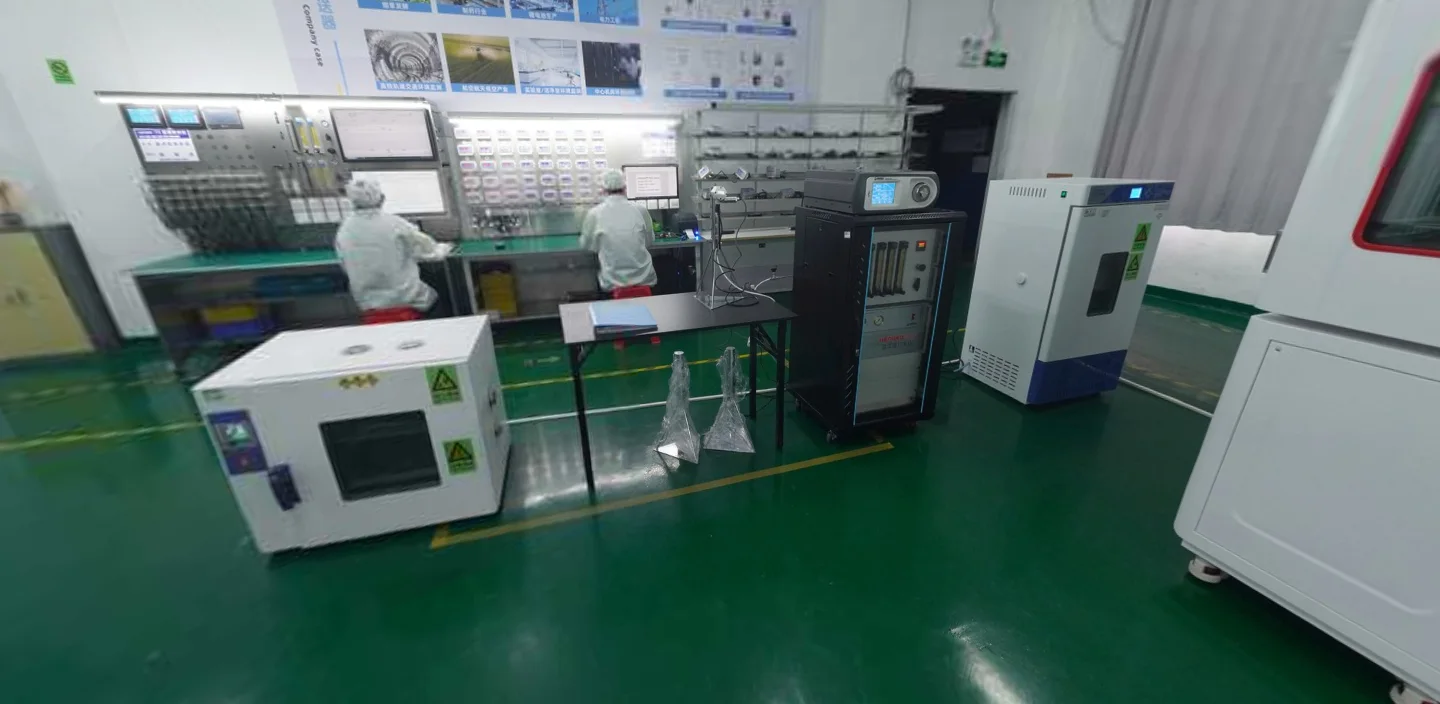
Dimensional checks, material evidence, media-related measurements or filtration/flow testing must be matched to the drawing, agreed method and acceptance criteria. Request any essential documents before quotation; do not assume every test or certificate is standard for every filter.
Match the material, media and connection to the application
Metal filter manufacturability is a system decision, not simply a micron number. The selected metal grade, structure, dimensions, joint and cleanability all affect suitability. For example, a change from porous powder to a layered mesh or pleated felt construction may change both pressure loss and the way a part is supported or cleaned.
- Alloy: discuss 304, 316L, bronze or other already documented options against the working fluid, cleaning chemicals and temperature.
- Media: identify whether a pore-size statement, nominal grade, mesh specification or efficiency test is being requested.
- Mechanical fit: confirm OD, ID, length, seal contact, end cap, thread, flange and installation orientation.
- Duty: provide flow, operating and differential pressure, temperature, contaminant and intended maintenance cycle.
Availability and final ratings are determined for the quoted component; general material capabilities are not finished-element guarantees.
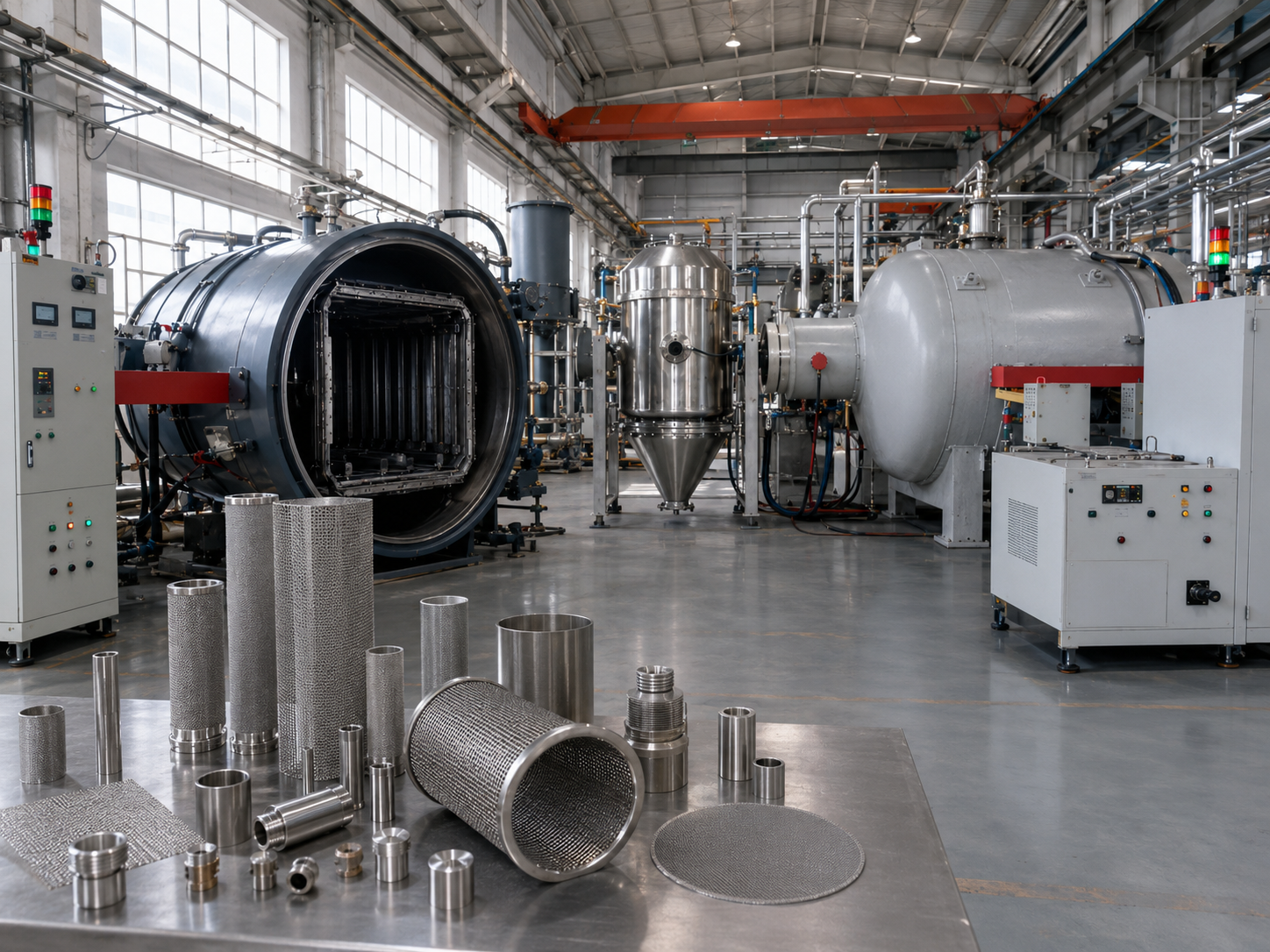
Why the filter construction changes the manufacturing and inspection plan
A micron number alone cannot establish whether an element will fit the equipment, provide the required flow or tolerate cleaning. The proposed construction should determine which dimensions and performance measurements matter. These are engineering review considerations, not claimed ratings for every METAVOX product.
Porous powder-sintered discs, tubes and cartridges
Construction decision: consider wall thickness, formed geometry, support, alloy and the meaning of the specified pore or filtration grade.
Quotation and acceptance discussion: dimensioned interfaces, working fluid and viscosity, allowable pressure loss, pore test basis if required, and whether the element will be cleaned or replaced.
Sintered multi-layer wire mesh elements
Construction decision: consider mesh-layer arrangement, forming direction, edge sealing, welded joints, supporting structure and available filtration area.
Quotation and acceptance discussion: weave or grade requirement, assembly drawing, joint integrity expectations, flow direction, and how the requested micron grade will be verified.
Metal fiber felt and pleated metal filters
Construction decision: consider the media grade, pleat geometry, support, seal and cleaning method together rather than selecting only a material name.
Quotation and acceptance discussion: acceptable clean differential pressure, particle-loading conditions, required fit and whether sample testing is needed for the actual service.
Replacement and formed stainless-steel assemblies
Construction decision: distinguish a dimensional match from a filtration-performance match. The old part may lack a usable drawing, media specification or test record.
Quotation and acceptance discussion: include photographs and the mating interface, identify known operating conditions, and agree which characteristics must match before approving a replacement.
These considerations help organize a technical RFQ. Media choices, mechanical limits, pressure-drop performance and test methods are verified only for the specific design and agreed operating conditions. If an acceptance basis is missing, it should be resolved before committing to a controlled sample or production batch.
What the filter-media construction tells us—and what it does not
Two metal filter elements may have the same nominal micron description yet behave differently in airflow, liquid flow, pressure drop, particle capture and cleaning. The construction, measurement method and operating conditions must be evaluated together. A catalog entry or a material datasheet is a starting point; it does not establish the performance of a different finished element.
Five-layer sintered wire mesh
Multiple woven mesh layers can provide an integrated filtering layer, drainage path and structural support. When evaluating this construction, specify the alloy, filtration layer, overall thickness, flow direction, active area, mounting and cleaning conditions. A nominal rating should not be treated as an absolute retention guarantee without an agreed method.
Reinforced or supported mesh
A further mesh reinforcement layer or a perforated metal backing may be considered when handling loads, rigidity, fit or backwash affect the design. Support geometry and open area influence the usable flow path. Any proposed differential-pressure limit must be evaluated for the complete element and connection—not inferred from the mesh sheet alone.
Stainless steel fiber felt
A sintered fiber structure is typically considered where surface area, particle loading and cleanability matter. Relevant supplier data may include bubble-point pressure, air permeability, thickness, porosity and dirt-holding capacity. Those properties describe different measurements and cannot be exchanged for one another or used without the test conditions.
Powder-sintered metal
Porous powder constructions can be formed as discs, tubes and other compact shapes. Material composition, pore structure, wall thickness, dimensions, joining method and cleaning method should be reviewed together. A manufacturer’s raw-media pore rating is not by itself proof of final filtration efficiency.
High-temperature metal media
FeCrAl fiber felt and other special alloys are distinct material options for selected thermal duties. Temperature suitability depends on the alloy grade, atmosphere, oxidation or corrosion environment, joints, support and mechanical loading. No universal temperature maximum or service-life figure should be applied to a custom finished assembly.
Finished cartridges, discs and assemblies
End caps, threads, gaskets, welds and supporting structures can determine whether a promising filter medium functions in the installed system. Request the drawing revision, sealing details, tolerances, cleaning method and intended acceptance tests before comparing quotations or approving production.
Technical review checklist: distinguish nominal rating, absolute rating, pore size and bubble-point result; document the test liquid or gas, flow, pressure or differential pressure and acceptance method. Agree what needs to be demonstrated by a supplier’s sample, material certificate, dimensional inspection or filtration test before making purchase commitments.
Documentation is order-specific: material certificates, bubble-point, flow or differential-pressure tests and dimensional reports should only be included when the agreed quotation and acceptance plan call for them.
Representative metal filter configurations to discuss in an OEM RFQ
The constructions below are illustrative technical references for discussion of custom OEM filter manufacture. Reference-media and supplier-catalog figures are not automatically METAVOX production test results, standard in-stock products or guaranteed finished-filter specifications. Our factory reviews each drawing and confirms material, media, geometry, manufacturing route, operating duty and the actual inspection acceptance method before quotation.
| Construction | Catalog reference for initial review | What must be confirmed for your order |
|---|---|---|
| Five-layer sintered wire mesh | 316L stainless-steel layered media; a standard supplier example has about 1.7 mm overall thickness and listed filtration grades across 1–100 μm. | Exact laminate and grade, nominal/absolute rating convention, sheet or finished shape, active area, flow direction and required retention test. |
| Reinforced six-layer mesh | A catalog construction adds a reinforcing mesh layer to a five-layer stack; its reference thickness is about 3.5 mm. | Reinforcement pattern, edge and support design, permitted bending, finished geometry and differential-pressure requirement. |
| Stainless sintered fiber felt | Supplier media tables list grades including 5, 7, 10, 15, 20, 25, 30 and 40 μm; individual grades have separate thickness and permeability values. | Chosen grade, alloy, fiber felt layering or protection, bubble-point/permeability test conditions, pleated or flat form, actual flow and dirt load. |
| Mesh or pleated cartridges | Supplier product families include cylindrical and pleated filter elements with configurable end fittings; examples include 222/220/226 arrangements, threads and flanges. | End fitting and seal drawing, support cage and joining method, media type, installed length, housing fit, cleaning and acceptance tests. |
| Powder-sintered porous metal | Reference families include stainless steel, bronze/copper powder and titanium-based shapes such as tubes, discs and compact components. | Material grade and corrosion compatibility, pore/retention test basis, wall thickness, machinability, weld or fitting detail and final-element performance. |
Why this is not a specification sheet: a catalog’s media grade or sheet thickness cannot certify a different assembled cartridge’s retention, burst strength, pressure drop, operating temperature or service life. The quotation must identify the actual part, alloy, media configuration, quantity, test basis and any required records before these become contractual requirements.
For deeper, construction-specific details, visit our sintered wire mesh, metal fiber felt, mesh cartridge and custom metal element pages.
What we need to evaluate a custom metal filter quotation
The six review points below keep engineering, purchasing and manufacturing aligned. Provide what is known; we can identify the unanswered questions before a quotation is confirmed.
| Review point | What the factory reviews | What the buyer should send |
|---|---|---|
| Product & duty | Select the component type and explain where it fits. | Existing part number, equipment or installation photo, drawing or sample reference. |
| Geometry & interfaces | Check OD, ID, length, wall or media thickness, end connection and sealing surfaces. | Dimensioned drawing, tolerances, housing interface, thread details and flow direction. |
| Media & alloy | Determine whether sintered powder, woven or sintered mesh, fiber felt, and the specified alloy suit the duty. | Required metal grade, filtration rating basis, process fluid and relevant corrosion/cleaning concerns. |
| Operating envelope | Assess fit between stated duty and the proposed construction; no generic family rating is an order-specific guarantee. | Flow, fluid viscosity, working temperature, operating pressure, maximum differential pressure and cleaning method. |
| Inspection & documentation | Agree which dimensional, visual, media, functional or material checks are required and feasible. | Critical-to-quality features, test method, acceptance criteria, requested records. |
| Sample & repeat supply | Clarify evaluation, feedback and repeat-order conditions before a production commitment. | Prototype quantity, projected batch/annual volume, preferred schedule and drawing revision. |
Attachments: the current online RFQ form does not upload drawings. Submit the initial request through Request a Quote, then send your drawing, CAD export, specification sheet or sample photographs to sales@industrialmetalfilters.com.
From a drawing or sample to a reviewable repeat-order specification
Clear checkpoints help reduce the risk of a part that fits a drawing but fails its real filtration duty. For a new or replacement project, the following is a proposed review sequence, with deliverables agreed for the actual RFQ.
Define the duty
Gather drawings, interfaces, operating media, filtration target, quantity and known constraints.
Review the route
Check alloy, media, fabrication, connection, feasibility and questions that affect quotation.
Agree sample criteria
Where samples are needed, define the revision, critical dimensions and relevant acceptance checks.
Control repeat orders
Specify the approved configuration, drawing revision, inspection documents and order quantities.
Dimensional inspection and quality requirements begin with the critical features
For an OEM element, the diameter alone is rarely enough. A thread, sealing face, end-cap profile, effective media area, support tube or weld can determine whether the filter fits and functions.
We review which measurements and checks are necessary for the part and whether the inspection basis is practical. Specific material certificates, pore-size or efficiency reports, pressure/flow tests and traceability documents should be agreed where required; they are not represented here as universally included services.
- Identify critical-to-fit dimensions, datums and tolerances.
- Define media, filtration rating and any agreed test method.
- Document the component revision and connection requirements.
- Clarify which inspection or material records must accompany the order.
Agree what constitutes an acceptable sample and a repeatable production order
For custom metal filter parts, purchasing, engineering and manufacturing need the same product definition. The review below separates information the buyer supplies from the tests and documents that must be agreed, rather than suggesting every order automatically includes a particular certificate or inspection report.
01. Design and duty baseline
Buyer input: drawing revision or sample reference, metal grade, filter-media specification, mating dimensions, flow direction and operating conditions.
Review outcome: identify missing dimensions or test definitions and agree the preliminary construction before a quotation can be confirmed.
02. Sample or first-article expectations
Buyer input: prototype quantity, critical-to-fit features and how an acceptable sample will be judged.
Review outcome: clarify feasible measurement or functional checks, the acceptance method and any separately required test documentation.
03. Repeat-order control
Buyer input: approved drawing or sample reference, permitted changes, ordering volume and important batch identification needs.
Review outcome: agree which design revision and inspection criteria govern later orders; any formal traceability or reporting requirements must be confirmed separately.
04. Documentation and commercial confirmation
Buyer input: requested material certificates, dimensional or flow reports, packaging requirements, target delivery date and any customer-specific quality clauses.
Review outcome: confirm which records or tests can be supplied, who accepts them and how they affect price and schedule before the order is placed.
A drawing check establishes geometry; it does not prove filtration retention. A material statement does not establish finished-element pressure performance. If filtration efficiency, pore size, differential pressure or chemical compatibility is critical, specify the media, fluid, conditions and agreed verification basis in the RFQ.
What a technical quotation can identify—and what still needs agreement
For an OEM or replacement element, the objective is a controlled manufacturing specification that purchasing, engineering and the METAVOX factory production team can evaluate. Our engineering review confirms the practical processing route, drawing revision, dimensions, material, inspection and documentation scope for the individual configuration.
Identification and revision
Identify the product drawing or reference sample, the drawing revision, material grade, mating equipment and any features that cannot change between batches.
Media specification
State whether the requirement is a nominal grade, tested particle retention, bubble point, permeability or a clean flow/differential-pressure result. Each uses a different acceptance basis.
Inspection deliverables
List the exact dimensional, material and functional checks needed and the records expected. Material certificates, flow curves or test reports are not automatically included unless the quote specifies them.
Example decision: when a drawing specifies a 10 μm media grade but the process requires a verified particle-removal efficiency at a set flow, the grade alone does not establish acceptance. The buyer and the METAVOX factory team need an agreed test medium, operating conditions, efficiency definition and sampling plan before the finished element is approved.
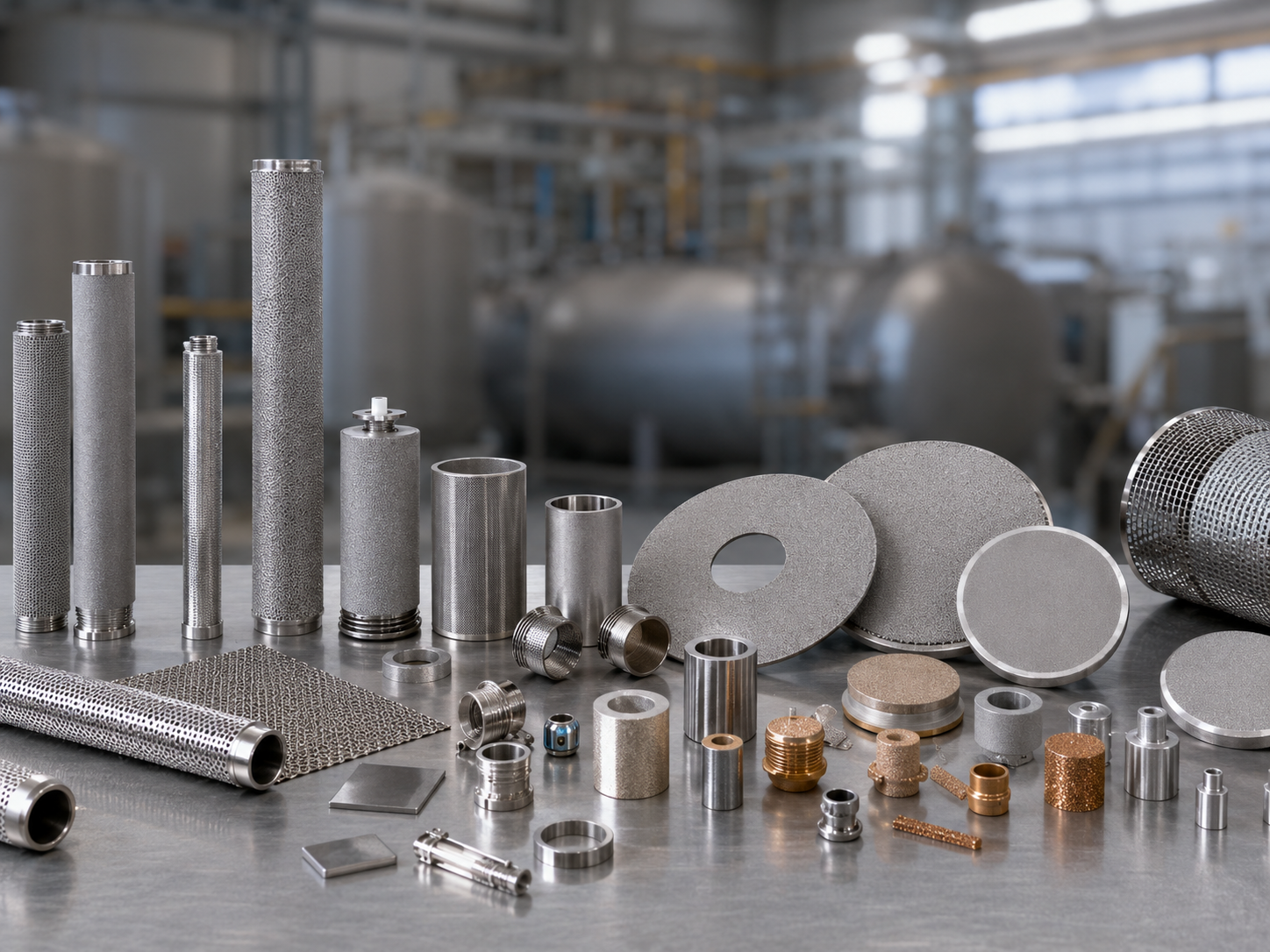
Industrial metal filter families supported by factory review
Explore the product page that most closely matches the structure you need. The factory page explains the buying and technical review process; detailed filtration and design questions belong to the appropriate product page.
Sintered Metal Filters
Porous sintered metal structures for industrial applications.
Stainless Steel Filter Elements
Custom steel media, assemblies and configurations.
Stainless Filter Cartridges
Industrial tubular, mesh, pleated and assembled forms.
Porous Metal Tubes
Geometry-led porous tubes and connected assemblies.
Sintered Metal Filter Discs
Solid or washer-shaped porous filter discs.
Custom Metal Filter Elements
Special profiles and OEM drawing-based components.
Additional forms: porous plates, mesh cartridges, metal spargers, bronze pneumatic mufflers, and pleated stainless cartridges. For general process background, the existing MPIF powder metallurgy overview is retained as an external technical reference; it does not describe METAVOX-specific equipment performance.
One factory review, different questions for different industrial buyers
Tell our factory whether this is a new OEM component, a replacement part or a repeat production order. This lets the METAVOX manufacturing team evaluate the drawing, sample-approval steps, critical features, quality checks and repeatability before quotation.
OEM equipment manufacturers
Lead with the housing and sealing interface, flow duty, product drawing and planned sample-to-series qualification. Confirm which specifications the equipment design controls.
Filter brands and distributors
Provide the required product family, target specification, packaging or identification needs and expected repeat volumes. Agree how consistent revisions and batch requirements will be managed.
Maintenance and replacement buyers
Send the used part or photos with dimensions, original operating duty and known failure details. A matching appearance does not by itself establish safe filtration equivalence.
Metal filter manufacturing and factory quotation FAQ
Can the METAVOX factory manufacture a filter from a drawing or an existing part?
Yes. Our own factory reviews customer drawings, existing samples and component photographs for custom metal filter manufacturing. The actual route depends on the material grade, media construction, geometry, joining method, connection and operating duty; a sample or updated drawing may be needed to resolve unknown dimensions before production.
Do you manufacture sintered powder, wire mesh and custom stainless filter components?
Our own-factory manufacturing offer covers custom metal filter component production and engineering review for powder-sintered structures, layered wire mesh, metal fiber felt and formed stainless assemblies. The production route and any selected specialist media depend on the actual drawing and confirmed material and process requirements; a general catalog grade is not a guaranteed assembled-filter efficiency.
Can you supply prototypes before a production order?
Sample and batch orders are reviewed case by case. Tooling, material, geometry, quantity and agreed acceptance checks affect whether and how prototypes are supplied.
Are inspection reports and material certificates included?
Documentation must be agreed for the specific order. Tell us which material record, dimensional report, media test or other evidence your quality team requires before quotation.
What is the minimum order quantity or lead time?
Neither is universal. They depend on the filter construction, material availability, tooling, sample status and production quantity. Include your target volume and schedule for review.
How do I send CAD files or photographs?
Use the online RFQ page for written project details, or email CAD files, PDF drawings and photographs directly to sales@industrialmetalfilters.com. A form submission is not required before emailing attachments; the current form does not offer a file-upload field.
Send the right technical information in your first RFQ
Please include product type, proposed material, filtration rating and test basis, dimensions and mating interfaces, operating medium, target flow and allowable differential pressure, temperature, cleaning method, drawing or sample reference, prototype and expected order quantity. If any field is unknown, explain the application so we can identify what needs to be established.
Planning a Custom Metal Filter Project?
Tell us what must fit, what the filter must retain, and which engineering or purchasing requirements matter. We will review the feasibility and required information before confirming a proposal.