Sintered Stainless Steel Filters Manufacturer
METAVOX is an industrial metal filter manufacturer operating its own factory and production equipment. Our factory manufactures drawing-based 304 and 316L sintered stainless steel filter elements, porous discs, tubes, cartridges, cylinders and custom stainless components for industrial gas, liquid, oil, chemical and OEM filtration applications. We evaluate material, media construction, dimensions, mating connections and operating duty before confirming a feasible manufacturing and inspection plan.
We support custom 304 and 316L stainless steel sintered filters based on drawing, sample, shape, size, micron rating, working medium, temperature, pressure, quantity and installation requirements.
- 304 and 316L sintered stainless steel filter discs, tubes, cylinders and cartridges
- Porous stainless steel filters for gas, liquid, oil, chemical and equipment protection
- Factory RFQ support for OEMs, filter companies, distributors and industrial buyers
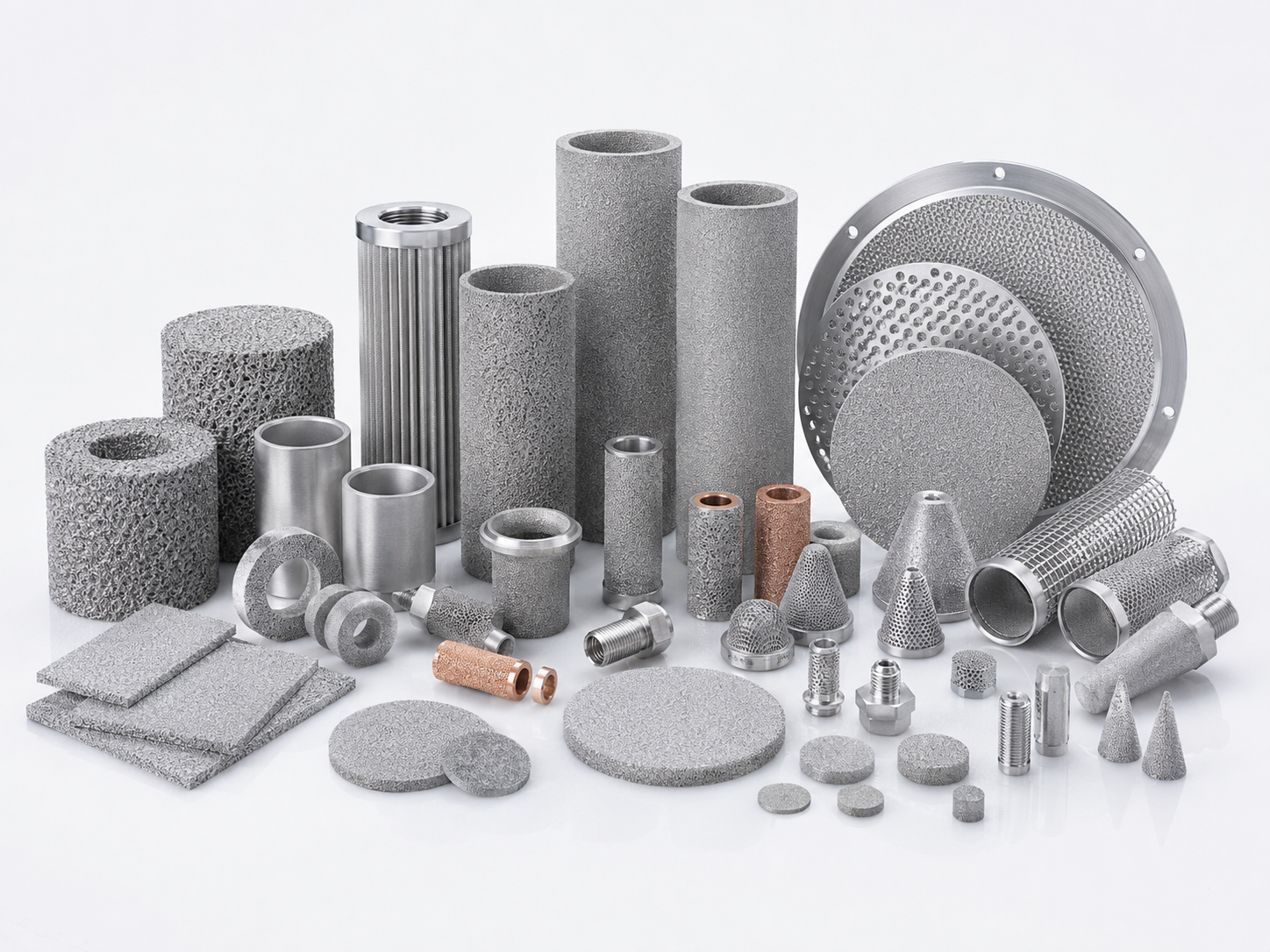
Custom Sintered Stainless Steel Filters for Industrial Applications
Sintered stainless steel filters are porous metal components used for filtration, controlled flow, venting and separation. The material grade, pore structure and finished geometry must be selected together to achieve the required flow and mechanical performance. For the broader material and product family, see Sintered Metal Filters.
Sintered Stainless Steel Filter Plates
Flat 304 and 316L porous stainless steel plate and sheet structures can be reviewed by size, thickness, filtration requirement and working conditions. See our Sintered Metal Filter Plates .
Sintered Stainless Steel Filter Tubes
Porous stainless steel tubes and cylinders for gas diffusion, liquid filtration, venting, flow control and industrial filter elements.
Sintered Stainless Steel Cartridges
Custom filter cartridges based on length, diameter, connection style, micron rating, pressure and working conditions.
316L Porous Stainless Steel Filters
316L stainless steel is an option where the process requires greater resistance to certain corrosive conditions than 304; suitability depends on the actual medium and temperature.
304 Stainless Steel Sintered Filters
304 stainless steel sintered filters for general industrial filtration, air filtration, liquid filtration and equipment protection.
Custom Porous Stainless Parts
Special-shaped porous stainless components made according to drawings, samples, tooling requirements and installation design.
Powder-Sintered Stainless Steel vs Sintered Mesh: Which Construction Fits?
Stainless steel describes the alloy; it does not identify the pore structure. Two filters made from 316L can have different flow, particle retention, mechanical support and cleaning requirements.
| Construction | How it is built | Typical decision factors | Suitable product pages |
|---|---|---|---|
| Powder-sintered stainless steel | Metal powder is consolidated into a rigid interconnected porous body. | Compact discs, tubes and non-pleated rigid shapes; specify media grade, wall thickness and allowable differential pressure together. | Filter discs · Porous tubes |
| Multi-layer sintered wire mesh | Woven metal meshes are bonded into a supported porous laminate. | Layer arrangement, mesh filtration grade, finished geometry, flow and cleaning access; performance depends on the selected laminate. | Sintered wire mesh filters |
| Metal fiber felt / pleated media | Fine metal fibers form a porous medium; finished elements may use pleating and supporting layers. | Effective area, dirt-holding requirements, pressure drop, seal materials and allowable cleaning process. | Metal fiber felt filters |
Specify the construction as well as the alloy. A “316L, 10 μm filter” description is not enough to establish retention efficiency, permeability, a safe differential-pressure limit or whether an existing housing will accept the element. Confirm the rating definition and the finished-element test conditions before approval.

Sintered Stainless Steel Filters Made by Drawing, Sample or RFQ
Most sintered stainless steel filters are made for specific working conditions rather than standard retail replacement. Buyers usually need a defined material grade, pore structure, shape, micron rating, connection method and installation form.
For drawings, sample photos, specification sheets or technical files, please email sales@industrialmetalfilters.com directly with project details and files; the web RFQ form is not required first.
- Custom outer diameter, inner diameter, thickness, length and shape
- 304 and 316L stainless steel material options reviewed by working condition
- Micron rating selected by filtration requirement, medium, flow and pressure
- Small batch, sample and production orders reviewed case by case
Sintered Stainless Steel Filters by Material, Shape and RFQ Detail
The right stainless steel sintered filter depends on material grade, filtration accuracy, mechanical strength, cleanability, corrosion resistance, medium, temperature and pressure.
| Filter Type | Common Materials | Typical Forms | Common RFQ Information |
|---|---|---|---|
| 316L Sintered Stainless Steel Filters | 316L stainless steel powder | Disc, tube, cylinder, cartridge, filter element | Material grade, micron rating, size, medium, pressure and application |
| 304 Sintered Stainless Steel Filters | 304 stainless steel powder | Disc, tube, porous cylinder, custom filter part | Outer diameter, thickness, length, filtration rating, quantity and drawing |
| Sintered Stainless Steel Filter Discs | 304, 316L, stainless steel porous media | Round disc, washer shape, thick disc, special disc | Diameter, thickness, center hole, pore size, drawing and quantity |
| Sintered Stainless Steel Filter Cartridges | 316L, 304, stainless steel sintered media | Cartridge, tube, candle, threaded filter element | Length, diameter, end cap, connection method, pressure and flow requirement |
How to Specify a Filter Before Selecting the Micron Grade
Identify the fluid and particles
State whether the service is gas, air, oil or liquid; include chemical composition, viscosity, solids type and expected operating temperature.
Define flow and pressure drop
Supply normal and peak flow, inlet and outlet pressures, allowable clean-filter ΔP and the maximum differential pressure across the element.
Match media to the housing
Provide installation envelope, filtration area, flow direction, end connection, seals, cleaning method and required filtration performance.
Why a Micron Rating Alone Does Not Predict Flow or Retention
| Parameter | What the buyer needs to define | How to evaluate it |
|---|---|---|
| Filtration / pore grade | Target particle size and whether a nominal, absolute or other retention definition is required. | Request a stated method and acceptance criterion; pore rating alone is not a guaranteed particle-removal efficiency. |
| Flow & clean pressure drop | Fluid, flow rate, temperature, viscosity and permissible initial ΔP. | Compare test or application data at the specified conditions, not at an unspecified reference flow. |
| Pressure strength | Maximum forward and reverse differential pressure, system pressure and support arrangement. | Confirm finished geometry, wall thickness, unsupported span and joint design; a filter medium rating is not a housing rating. |
| Corrosion & cleaning | Fluid chemistry, chloride content where relevant, cleaning agents, frequency and process temperature. | Review alloy compatibility and cleaning procedure together; repeated cleaning requires an approved method. |
Clean-filter pressure drop is the pressure difference measured across a new or cleaned element at a specified fluid flow. A design must also account for how this pressure difference may increase as contaminants accumulate.
Stainless Steel Sintered Filter Discs and Tubes: Dimensions to Specify
A material grade and nominal micron value are not enough to quote a finished porous part. A few clearly defined drawing dimensions prevent most tube, disc and replacement-element mismatches.
Porous Filter Disc / Ring
Also note edge chamfer, seating face, flatness, required filtration grade and tolerance on critical dimensions.
Porous Filter Tube / Cylinder
For a uniform-wall tube, nominal wall thickness is (OD − ID) ÷ 2. Confirm sealing dimensions, flow direction and connection tolerances.
Replacement filter tip: When replacing an existing element, include the old part’s dimensions, end-interface photos, original assembly part number if known and the actual operating duty. A visual match alone does not establish equivalent filtration performance.
Sintered Stainless Steel Filter Specifications and Custom Size Options
Choose a porous construction, nominal filtration grade and basic geometry before finalising a drawing. The options below are useful starting points for industrial quotation requests.
On mobile, swipe the table sideways to view all specifications.
| Filter construction | Material options | Nominal grade reference for an RFQ | Dimensions to request (examples, not stock) |
|---|---|---|---|
| Powder-sintered discs and plates | 304 or 316L stainless steel | 0.2, 0.5, 2, 5, 10, 20, 40 or 100 µm nominal grade options | Example disc diameters: 10, 25, 50, 100, 150 or 200 mm; requested thicknesses: 1, 2, 3, 5 or 10 mm; round, annular or drawing-based shapes. |
| Powder-sintered tubes and cartridges | 316L stainless steel; 304 by application review | 0.2, 0.5, 2, 5, 10, 20, 40 or 100 µm nominal grade options | Example outside diameters: 25.4, 38.1, 50.8, 63.5 or 76.2 mm; lengths: 125, 250, 500, 750 or 1,000 mm; requested wall thickness about 1–3 mm. |
| Multi-layer sintered wire mesh | 316L stainless steel; other grades by review | 1, 2, 5, 10, 20, 40 or 100 µm media-grade examples | Five-layer media: about 1.7 mm; reinforced six-layer media: about 3.5 mm. Reference flat-sheet format: 1,200 × 1,000 mm. Finished discs, tubes or cylinders by drawing. |
| Sintered metal fiber felt media | 316L, 316 or 304 stainless steel | 5, 7, 10, 15, 20, 25, 30 or 40 µm media-grade examples | Typical raw media thickness varies by grade from approximately 0.30–0.68 mm; pleated elements, supports and end fittings are specified separately. |
The figures above are specification examples for engineering enquiries, not a standard-stock list or a finished-filter performance guarantee. Final grade availability, production dimensions, tolerances and test criteria are agreed for the chosen construction and order.
End connections
Open or closed ends, threaded fittings, flanges, welded ends, O-ring interfaces and custom caps may be specified by drawing. Include the connection standard and sealing surface.
Filtration and flow
State the particle size or pore grade, required flow, working fluid, allowable clean pressure drop and maximum forward or reverse differential pressure.
Order information
Include the material grade, OD/ID, length, wall thickness, tolerance, drawing or replacement sample, quantity and any required inspection results.
304 vs 316L Sintered Stainless Steel Filters
Material choice should match working medium, corrosion level, cleaning method, temperature, pressure and service environment. 304 is often used for general industrial conditions, while 316L is commonly considered for more demanding corrosion environments.
304 Stainless Steel
Suitable for many general industrial filtration applications where stainless steel structure, cleanability and moderate corrosion resistance are required.
316L Stainless Steel
Considered for chemical and process duties where improved resistance to some forms of corrosion is needed; check the fluid, chloride exposure and temperature before selecting.
Custom Material Review
For uncertain filter media or special service conditions, the METAVOX factory engineering team reviews material grade, pore structure, metal compatibility, working parameters and practical production methods before quotation. A supplier’s media specification alone is not a tested performance rating for the finished component.
Choosing Between 304 and 316L for the Actual Process Fluid
| Selection question | 304 stainless steel | 316L stainless steel |
|---|---|---|
| General industrial fluids | Can be a candidate where process-fluid compatibility and cleaning requirements allow it. | Can also be suitable; higher alloy content does not automatically mean better value for every service. |
| Chlorides and localized corrosion | Evaluate pitting and crevice-corrosion risks carefully. | Often offers improved resistance to chloride-related localized corrosion compared with 304, but is not immune—especially in aggressive temperature and concentration conditions. |
| Material grade documentation | Confirm the ordered grade and the available material-identification records for the actual batch. | Confirm 316L grade and process-specific requirements; do not assume every supplied part has identical certification documentation. |
| High temperature / aggressive chemicals | Neither grade should be approved from the alloy name alone. Verify exact fluid concentration, temperature, exposure, cleaning agents and the integrity of joints or seals. | |
Material compatibility comes before media selection. If the liquid or gas includes chlorides, acids, solvents or reactive species, include concentrations and operating temperature in your inquiry. A higher-grade alloy is not a substitute for a process-specific corrosion review.
Where Sintered Stainless Steel Filters Are Commonly Used
Stainless steel sintered filters are used when buyers need rigid porous metal parts with stable structure, cleanability and resistance to industrial working conditions.
Gas and Air Filtration
Used for gas filtration, air filtration, diffusion, venting, silencing and protection of industrial equipment components.
Liquid and Oil Filtration
Used in liquid filtration, oil filtration, hydraulic systems, process equipment and reusable filter assemblies.
Chemical Processing
316L porous stainless steel filters are often considered when corrosion resistance and cleanable metal structure are important.
OEM Equipment Protection
Custom sintered stainless filter elements can protect pumps, valves, nozzles, sensors and industrial process systems.
Laboratory and Pilot Equipment
Small filter discs, tubes and porous components can be made for test equipment and compact filtration systems.
Custom Engineering Projects
Buyers can send drawings, sample photos, working conditions and quantity for factory feasibility review.
Sintered Stainless Steel Filters vs Mesh and Pleated Elements
Different stainless steel filter structures solve different problems. Sintered powder filters are not the same as wire mesh filters or pleated filter cartridges.
Sintered Stainless Steel Filters
Suitable for rigid porous discs, tubes and elements where stable pore structure and compact metal filtration are required.
Sintered Wire Mesh Filters
Suitable for layered mesh structures where mechanical strength, cleanability and formed mesh cartridges or discs are important.
Pleated Stainless Filter Elements
Suitable for cartridge assemblies where higher surface area is needed in a limited installation space.
Technical Checks for Sintered Stainless Steel Filter Acceptance
Before approving a production filter, agree on the checks that matter to the application. The inspection plan is selected for the actual material, construction, quantity and duty—not every test applies to every part.
| Requirement | Useful documentation or verification | Specify in the RFQ |
|---|---|---|
| Geometry & installation | Drawing revision, critical OD/ID, thickness, length, mounting and sealing details; agreed dimensional inspection. | Drawing, tolerances, connection type and inspection points. |
| Stainless material | Material identification or supporting material records when available and requested. | Grade (304/316L), application chemistry and any documentation required for acceptance. |
| Pore / filtration performance | Appropriate pore-grade or particle-retention verification method, where feasible for the selected geometry. | Required result, method, test medium and acceptance threshold. |
| Permeability / pressure drop | Flow or permeability check at defined test conditions; finished-element ΔP and flow direction where required. | Flow, medium, viscosity or temperature, maximum clean ΔP and operating orientation. |
| Cleaning and re-use | Compatibility review for backwash or cleaning chemicals, and any suitable inspection after cleaning. | Contaminants, cleaning method, interval and reuse criteria. |
Availability of individual inspections, certificates or performance tests is confirmed during engineering review and quotation. No single generic pore-size or pressure value can be applied to every 304/316L product shape.
Request a Quote for Sintered Stainless Steel Filters
To quote accurately, please provide material grade, product shape, outer diameter, inner diameter, length, thickness, filtration requirement, working medium, flow rate, allowable differential pressure, temperature, quantity and drawing details.
Copy This Information into Your Inquiry
- Part: disc / tube / cartridge / other (attach drawing or photos)
- Alloy and structure: 304 or 316L; powder-sintered, mesh or other media as applicable
- Dimensions: OD, ID, thickness, overall length, porous length and tolerances
- Filtration duty: medium, contaminants, target filtration result and test requirement
- Operating conditions: normal/peak flow, temperature, system pressure and permitted differential pressure
- Installation: threads, flanges, end caps, seals, flow direction and cleaning plan
- Procurement: sample quantity, anticipated production quantity and required delivery date
If you do not know the required pore grade, send the duty conditions rather than guessing a micron number. The suitable grade and feasible inspection method can then be reviewed.
The RFQ form does not upload attachments. If you have drawings, sample photos or technical files, email them to sales@industrialmetalfilters.com.
What Happens After You Submit a Stainless Steel Filter Inquiry?
For a new design or replacement filter, confirm the process duty and installation geometry before agreeing on a material, porous structure or validation method.
Send the working medium, solids, flow, clean pressure drop, temperature and target separation requirement. Attach a drawing or existing part photos.
Confirm which porous construction is suitable, material compatibility, critical dimensions, end connections and what checks are needed for the chosen element.
Specify quantity, feasible construction, inspection requirements, drawings and any sampling or tooling needs before placing a production order.
Related Sintered Stainless Steel Filter Products
Compare sintered stainless steel filters with cartridges, discs and porous tube structures.
Stainless Steel Filter Elements
Industrial stainless steel filter discs, tubes, cartridges, mesh elements and custom assemblies.
View Elements →Stainless Steel Filter Cartridges
316L and 304 stainless steel sintered, mesh and pleated filter cartridge configurations.
View Cartridges →Sintered Metal Filter Discs
Stainless steel, bronze, mesh and washer-shaped sintered filter discs.
View Discs →Porous Metal Tubes
Porous stainless steel tubes and sintered metal tubes for filtration and diffusion.
View Tubes →Stainless Steel Grade Reference for Filter Buyers
304 and 316L are not interchangeable for every process fluid. Specify the operating fluid and concentration, temperature, chloride exposure, cleaning agents and applicable material requirements before grade selection. Review our stainless steel filter element options or send the operating conditions for a material-compatibility review.
Sintered Stainless Steel Filters FAQ
Common questions from industrial buyers before requesting custom stainless steel sintered filter elements.
What information is needed to quote sintered stainless steel filters?
Please provide material grade, shape, dimensions, micron rating, working medium, temperature, pressure, quantity, application and drawing details if available.
Can you supply 316L sintered stainless steel filters by drawing?
Yes. Our own factory reviews customer drawings, sample photographs, metal grade, porous-media construction, end connections and service conditions before confirming feasibility, tooling, sample-inspection requirements and batch quotation. See our factory and production overview.
What is the difference between sintered stainless steel filters and stainless steel mesh filters?
Sintered stainless steel filters usually refer to porous sintered metal structures, while stainless steel mesh filters use woven or layered mesh structures. Selection depends on filtration rating, strength, flow and cleaning needs.
How should buyers send drawings or sample photos?
The RFQ form does not upload attachments. Send drawings, sample photos or specification sheets directly to sales@industrialmetalfilters.com; no web form submission is needed first. For inquiries without attachments, use the web RFQ form.
Does a 10 micron pore rating mean 100% removal of 10 micron particles?
No. Pore grade and particle-retention efficiency are not interchangeable specifications. Ask for the rating definition and applicable test method when a defined separation efficiency is required.
What data is needed to evaluate pressure drop across a sintered filter?
Provide fluid type, flow rate, operating temperature, viscosity if relevant, available filtration area, element geometry and the maximum acceptable clean-filter differential pressure.
Can 316L sintered stainless steel filters be cleaned and reused?
Some constructions can be cleaned and reused, but the cleaning method and service life depend on contaminants, pore structure, geometry and chemical compatibility. Confirm the recommended procedure for the selected element before specifying reuse cycles.
Need Custom Sintered Stainless Steel Filters?
Send your drawing, sample photo, material grade, micron rating, size, quantity and working conditions. We will review feasibility and provide a factory quotation.