Sintered Metal Spargers Manufacturer
METAVOX manufactures custom sintered metal spargers, porous metal spargers, sintered stainless steel spargers and porous gas-distribution elements for aeration, gas-liquid contact, process gas injection, mixing and industrial diffusion applications.
Spargers are specified according to material, porous-element shape, pore requirement, gas flow, liquid depth or process pressure, available gas supply pressure, allowable porous-element differential pressure, connection, installation geometry, working media, temperature, cleaning requirements, quantity and drawing details.
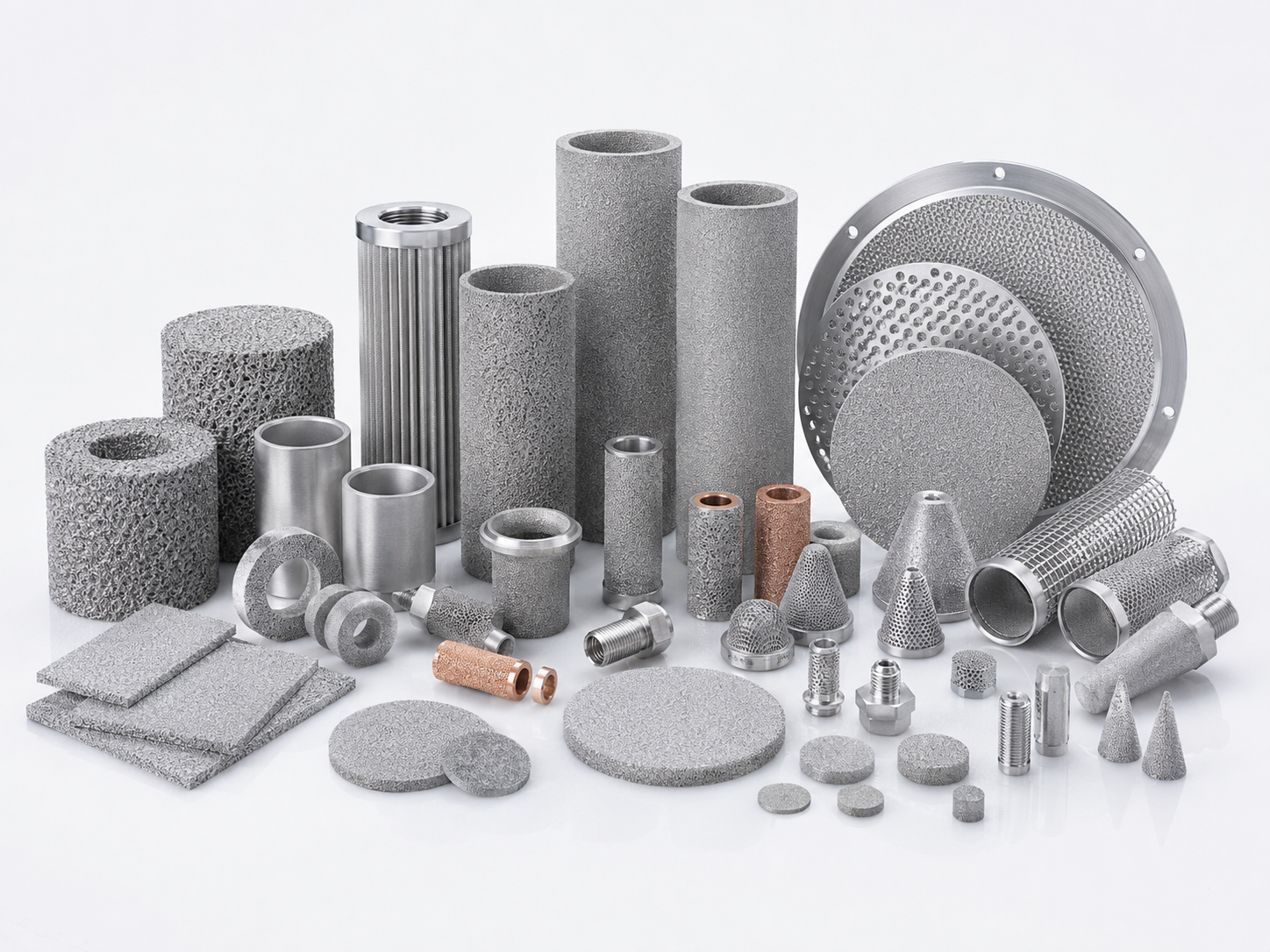
Custom Porous Metal Spargers for Gas Distribution
Sintered metal spargers distribute gas through a porous metal surface. The final design depends on gas flow, process conditions, available pressure, porous area and installation geometry.
Porous Metal Tube Spargers
Tubular porous elements provide gas distribution through the tube wall and can be manufactured according to diameter, length, connection and process requirements.
Porous Disc Spargers
Disc-shaped porous components can be used where gas distribution is required through a compact flat porous surface.
Sintered Stainless Steel Spargers
Stainless steel porous elements can be selected for industrial gas-liquid processes where material compatibility, corrosion resistance and reusable metal construction are important.
Threaded, Welded & Custom Interfaces
Connections can be designed according to the vessel, piping, manifold or equipment interface shown on the project drawing.
Custom Gas-Distribution Elements
Special porous shapes can be evaluated for equipment manufacturers, pilot systems, laboratory equipment and custom process assemblies.
Replacement Sparger Components
Existing porous spargers can be evaluated from drawings, photographs, dimensions, equipment information or physical samples.
Choose an In-Tank, Disc or Multi-Element Sparger Layout
Begin with the vessel and gas-delivery duty. A compact vessel, flat-bottom tank and larger distribution manifold can require different porous-element layouts, even when the filter medium is similar.
In-Tank Tubular Sparger
For single-point gas introduction, pilot vessels or a tank installation with room for a tube. Confirm porous length, clearance from impellers and connection at the vessel wall.
Porous Disc Sparger
For compact flat-area gas release or a defined mounting pocket. Specify disc diameter, thickness, retaining support and the area not covered by the gasket.
Multiple Spargers on a Manifold
For broader tank coverage or multiple distribution zones. Confirm branch spacing, support, shared header pressure loss and whether each element receives adequate gas flow.
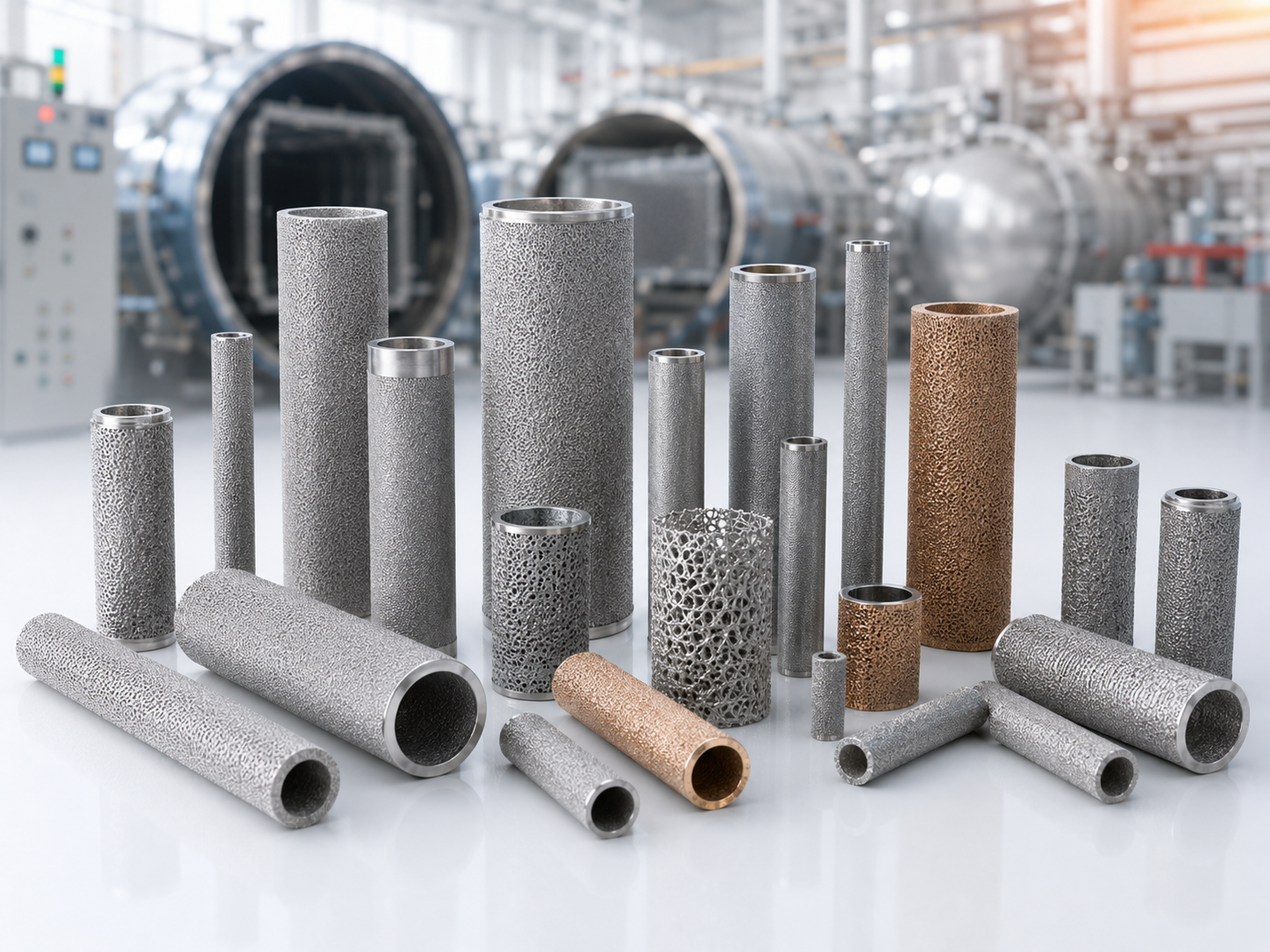
Gas Must Overcome Process Resistance and Porous-Element Pressure Drop
Gas entering a porous sparger must pass through the porous metal structure before entering the surrounding liquid or process environment.
Available gas supply pressure therefore has to overcome the process-side resistance, including liquid static head where applicable, plus the pressure drop through the porous element and other system losses.
- Define required gas flow under operating conditions
- Provide liquid depth or process pressure where applicable
- State available gas supply pressure
- Specify porous-element dimensions and installation geometry
- Provide pore requirement and expected gas-distribution objective
- Identify working gas, liquid or process medium
Sintered Metal Sparger Size and Connection Options to Quote
The following combinations are practical RFQ examples based on industrial sparger size families—not METAVOX stock codes, published production limits or guaranteed availability. Submit a drawing for final confirmation.
On a phone, swipe the table horizontally to view all columns →
| RFQ configuration | Example dimensions | Connection or mounting | Critical information |
|---|---|---|---|
| Compact in-tank tube | Ø12.7 mm outside diameter × 150 mm active porous length | Gas tube stub or threaded adapter by drawing; sealed tube end | Mounting depth, clearance, actual gas flow and supply pressure |
| Standard in-tank tube inquiry | Ø25.4 mm outside diameter × 300 mm active porous length | Thread, compression or welded fitting to suit equipment | Open/closed end, support, gas inlet and process medium |
| Longer tank tube inquiry | Ø25.4 mm outside diameter × 600 mm active porous length | Custom vessel connection and support arrangement | Agitator clearance, cantilever support and pressure distribution |
| Porous disc inquiry | Ø50 mm × 3 mm or Ø100 mm × 5 mm draft disc geometry | Retaining ring, gasket or custom holder | Exposed porous face, blocked rim, flatness and seal design |
| Multi-element tank inquiry | Four Ø25.4 × 300 mm porous tubes on a custom header | Manifold branch layout, welding and process fittings by drawing | Individual branch flow, mounting, cleaning and withdrawal clearance |
| In-line sparger inquiry | Pipe bore, insertion depth and porous sleeve geometry defined by process drawing | NPT, BSPP, flange, sanitary fitting or welded stub as applicable | Pipe flow, allowable restriction, gas injection location and maintenance access |
How to Specify a Sintered Metal Sparger
Sparger performance depends on the complete gas-delivery system, not only the porous medium. Gas flow, pressure, immersion conditions, pore structure and exposed porous area should be reviewed together.
On a phone, swipe the table horizontally to view all columns →
| Engineering Input | Why It Matters | Information to Provide |
|---|---|---|
| Required Gas Flow | Gas flow determines the amount of gas that must pass through the available porous surface. | Required gas flow and operating condition used for the flow value. |
| Gas Type | Gas composition can influence material selection and process suitability. | Air, nitrogen, oxygen, CO₂ or other process gas. |
| Liquid / Process Medium | Liquid chemistry, viscosity, contamination and process conditions affect material and operating behavior. | Liquid or process medium and relevant composition details. |
| Liquid Depth | Immersion depth creates static pressure that the gas supply must overcome. | Installation depth below the liquid surface or vessel operating level. |
| Process Pressure | Pressurized vessels increase the pressure required to introduce gas through the sparger. | Vessel or process pressure during operation. |
| Gas Supply Pressure | Available supply pressure must be sufficient to overcome process resistance and porous-element ΔP. | Normal and maximum available gas supply pressure. |
| Porous-Element Differential Pressure | Flow through the porous structure creates pressure loss. | Allowable ΔP or available pressure margin where known. |
| Pore Requirement | Pore structure influences gas distribution, flow resistance and the gas-release behavior at the porous surface. | Required pore specification or process performance objective. |
| Porous Surface Area | Available porous area affects gas flux through the element. | Tube dimensions, disc diameter or other exposed porous geometry. |
| Connection | The sparger must match the vessel, gas line or equipment interface. | Thread, flange, welded connection or custom mating drawing. |
| Installation Geometry | Position, orientation and available space influence gas distribution and mechanical design. | Vessel drawing, installation orientation, clearances and mounting details. |
| Temperature | Operating temperature affects material and finished-assembly selection. | Normal and maximum process temperature. |
| Cleaning Method | Deposits or process contamination can change porous-element flow resistance over time. | Contaminant type, expected fouling and intended cleaning procedure. |
| Quantity | Quantity affects manufacturing method, setup and quotation. | Prototype, qualification and expected production quantity. |
Pore Size Does Not Directly Equal Bubble Size
The pore structure of a sintered metal sparger influences gas release from the porous surface, but the final bubbles formed in a liquid are also influenced by gas flow, gas properties, liquid properties, surface tension, pressure conditions and installation geometry.
A pore value should therefore not be interpreted as a guaranteed bubble diameter. If bubble distribution or gas-transfer performance is an acceptance requirement, provide the complete operating and test conditions.
Check Gas Pressure, Immersion Head and Exposed Sparger Area Together
A gas-distribution component must be sized against actual operating flow at the immersed element—not just the standard gas flow stated on a supply-line drawing.
Gas Supply Pressure Budget
Exposed Tubular Area
For a straight tube with exposed outer wall, an initial area estimate is A ≈ π × outer diameter × active porous length. Subtract blocked mounting sections and any inactive length.
Exposed Disc Area
For one open circular face, use A ≈ π × exposed diameter² ÷ 4. A gasket ring or holder reduces the active area; do not assume both faces are exposed.
Gas Flux & Distribution
Gas flux = actual volume flow at sparger conditions ÷ exposed porous area. Verify flow distribution between manifold branches and check that local release behavior suits the process.
What to Check Before Approving a Custom Sparger
A sparger should be approved against its actual vessel interface and process duty. Use the drawing and agreed test conditions to decide which checks are necessary for the supplied assembly.
On a phone, swipe the table horizontally to view all columns →
| Acceptance item | What the buyer should define | How it may be checked |
|---|---|---|
| Material and exposed metals | 316L or alternate alloy, wetted fittings, compatibility with gas and liquid | Material identification and requested documents, if agreed for the order |
| Geometry and vessel fit | OD / ID, porous length, flange or thread, holder geometry, sealed or open end | Drawing-based dimensional inspection and fit check against the mating part |
| Nonporous joint tightness | Where gas must not bypass the porous media, define leakage acceptance | Joint / assembly leak check under an agreed method and pressure |
| Gas flow and pressure drop | Gas, flow reference condition, immersion depth, medium and maximum acceptable ΔP | Defined flow-vs-pressure test where specified and feasible |
| Gas release pattern | Distribution objective, liquid, gas, operating flow and visualization method | Witness observation or documented process-specific test if required |
| Maintenance and repeat supply | Cleaning agents, expected fouling, replaceable mounting and repeat order quantity | Sample disassembly, cleaning review and approved drawing revision |
Applications for Porous Metal Spargers
Porous metal spargers are used where a gas must be distributed into a liquid or process environment through a durable porous metal surface.
Aeration
Porous metal elements can distribute air or process gas into liquid systems for aeration applications.
Gas-Liquid Contact
Gas can be introduced through a porous surface where the process requires controlled gas-liquid contact.
Process Gas Injection
Sintered metal spargers can be incorporated into process vessels for controlled introduction of compatible gases.
Mixing & Agitation Support
Gas distribution can support selected mixing or agitation processes where gas injection forms part of the process design.
Pilot & Laboratory Systems
Custom porous metal gas-distribution components can be manufactured for pilot, research and laboratory equipment.
OEM Process Equipment
Equipment manufacturers can specify custom sparger dimensions, connections and installation geometry according to the process design.
Porous Metal Spargers, Filter Tubes and Steam-Injection Equipment
Similar-looking tubular components can perform very different functions. Selection should begin with the actual process duty.
Porous Metal Spargers
Choose a porous metal sparger when gas must be distributed through a porous metal surface into a liquid or process environment.
Porous Metal Tubes
Porous metal tubes can also be used for filtration, venting or equipment protection where gas-liquid sparging is not the primary function.
Direct Steam Injection Equipment
Equipment designed to inject steam directly for tank heating or thermal processing has different process, safety and mechanical requirements from porous-metal gas-distribution spargers.
Custom Sparger Components by Drawing and Process Conditions
METAVOX reviews custom porous metal spargers according to material, dimensions, connection, porous structure, gas flow, process pressure and installation requirements.

Porous metal manufacturing for tubular, disc and custom industrial components.
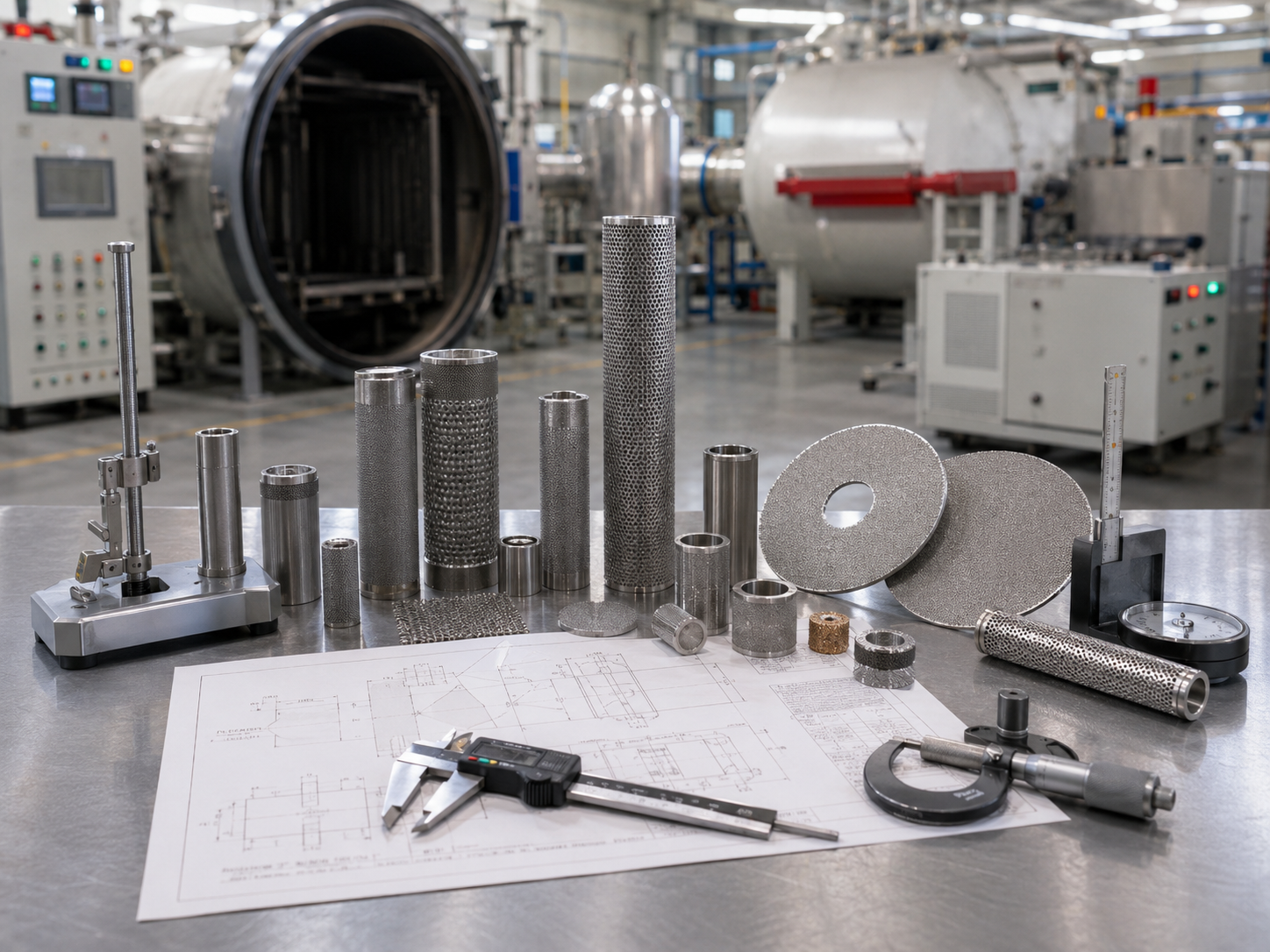
Drawing and dimensional review for custom and replacement porous-metal projects.
Copy-Ready Sintered Metal Sparger RFQ
Fill in what is known and attach a vessel, sparger or connection drawing. If part of the process is still being developed, state the performance objective and constraints instead of inventing a pore size.
Engineering purchase specification
Request a Quote for Sintered Metal Spargers
Send the material, sparger shape, dimensions, porous requirement, required gas flow, gas type, liquid or process medium, immersion depth or process pressure, available gas supply pressure, allowable porous-element ΔP if defined, connection, installation drawing, temperature, cleaning requirements, quantity and sample information.
Related Porous Metal Products
Compare spargers with porous tubes, filter elements, discs and custom metal components.
Porous Metal Tubes
Tubular porous components for filtration, venting, diffusion and controlled flow.
View Porous Metal Tubes →Sintered Metal Filters
Industrial porous and sintered metal filter products in multiple geometries.
View Sintered Metal Filters →Sintered Metal Filter Elements
Porous cartridges, tubes, discs and custom industrial components.
View Filter Elements →Sintered Metal Filter Discs
Round porous metal filter and flow-control components.
View Filter Discs →Sintered Stainless Steel Filters
Porous stainless steel filters for industrial gas and liquid service.
View Stainless Filters →Custom Metal Filter Elements
Drawing-based porous metal components and replacement parts.
View Custom Elements →Sintered Metal Spargers FAQ
Common engineering and purchasing questions for porous metal gas-distribution components.
What is a sintered metal sparger?
A sintered metal sparger is a porous metal component designed to distribute gas through its porous surface into a liquid or process environment.
What information is needed to quote a porous metal sparger?
Please provide material, sparger dimensions, pore requirement, required gas flow, gas type, liquid or process medium, installation depth, vessel or process pressure, available gas supply pressure, connection, temperature, quantity and drawings.
Does sparger pore size equal bubble size?
No. Pore structure influences how gas exits the porous surface, but bubble formation also depends on gas flow, gas and liquid properties, pressure, surface tension and installation conditions.
Why is liquid depth important for a sparger?
Liquid depth creates static pressure above the sparger. The gas supply must overcome this resistance, together with porous-element pressure drop and any other system losses.
Why is gas supply pressure required?
Gas supply pressure must be sufficient to deliver the required flow against process pressure, liquid static head, porous-element resistance and piping losses.
Can METAVOX manufacture custom tubular spargers?
Yes. Tubular porous components can be evaluated according to material, OD, ID, porous length, connection, gas flow and process requirements.
What is the difference between a porous metal sparger and a porous metal filter tube?
A porous metal sparger is selected specifically for gas distribution into a liquid or process environment. A porous metal tube may instead be used for filtration, venting, equipment protection or other controlled-flow functions.
Are these porous metal spargers intended for direct steam tank heating?
Porous metal spargers are primarily designed for controlled gas distribution. Direct steam injection for tank heating involves additional thermal, process, mechanical and safety requirements and should be evaluated as a separate equipment application.
Can spargers be cleaned and reused?
Reuse and cleaning depend on the material, deposited contaminants, pore structure and process conditions. Provide the expected fouling and cleaning method when cleanability is important.
Need Custom Sintered Metal Spargers?
Send your drawing, sparger geometry, material, pore requirement, gas flow, process medium, installation depth, available gas pressure, connection, temperature and quantity. METAVOX will review manufacturing feasibility and provide a quotation.