Sintered Bronze Pneumatic Mufflers Manufacturer
METAVOX manufactures custom sintered bronze pneumatic mufflers, pneumatic silencers and porous bronze exhaust components for compressed-air exhaust, airflow management, noise reduction and industrial pneumatic equipment.
Mufflers are specified according to thread or connection, dimensions, porous structure, required exhaust airflow, allowable back pressure or pressure drop, system pressure, working medium, temperature, installation space, quantity and drawing requirements.
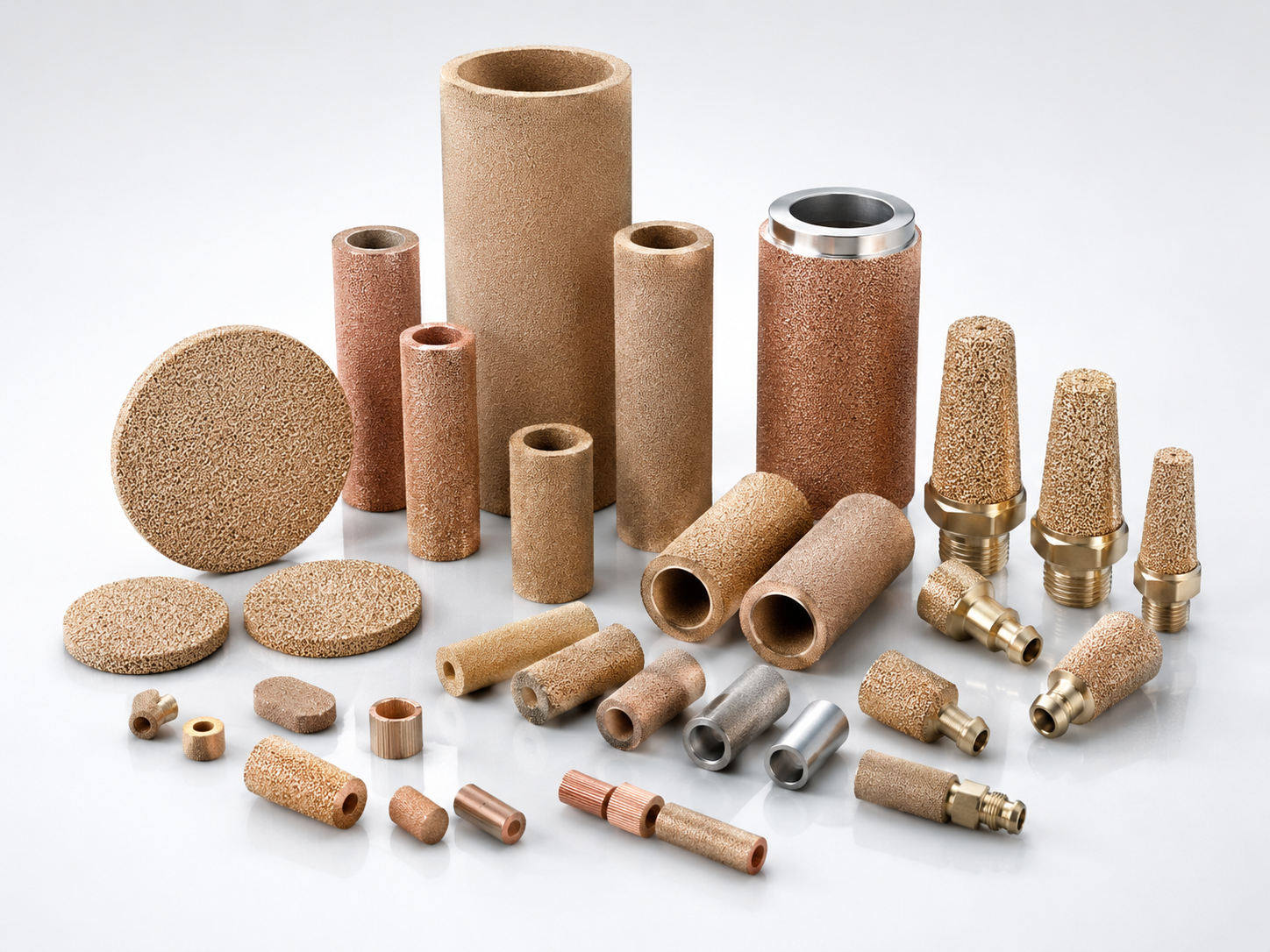
Custom Pneumatic Mufflers for Industrial Exhaust Applications
Sintered bronze mufflers are compact porous metal components installed at pneumatic exhaust points where discharged air must pass through a controlled porous structure.
Sintered Bronze Pneumatic Mufflers
Porous bronze mufflers for compressed-air exhaust, controlled air discharge and industrial pneumatic equipment.
Pneumatic Silencers
Porous bronze silencer components for pneumatic exhaust applications where exhaust noise and airflow restriction must be considered together.
Pneumatic Exhaust Mufflers
Exhaust components manufactured according to airflow, allowable exhaust restriction, connection, dimensions and operating conditions.
Threaded Bronze Mufflers
Threaded porous bronze components manufactured according to the mating connection, installation space, equipment geometry and drawing requirements.
Custom Pneumatic Muffler Components
Non-standard exhaust mufflers can be developed from drawings, samples, equipment specifications and production requirements.
Replacement Pneumatic Mufflers
Existing components can be evaluated from old-part photographs, dimensions, thread details, drawings or physical samples.

Pneumatic Mufflers Made by Drawing, Sample and Equipment Requirements
Industrial pneumatic mufflers are normally selected around the actual valve, exhaust port, connection, available installation space and operating conditions.
The porous exhaust element, connection and external geometry should therefore be evaluated together before final dimensions and manufacturing details are confirmed.
- Custom thread, connection and installation geometry
- Custom OD, length and porous-element dimensions
- Sintered bronze porous exhaust construction
- Airflow, back pressure, system pressure, temperature and working-medium review
- OEM, replacement, sample and batch-production projects
How to Specify a Sintered Bronze Pneumatic Muffler
A pneumatic muffler should not be selected by thread size alone. Exhaust airflow, allowable restriction, porous structure, operating conditions and installation geometry all influence the finished component.
| Selection Factor | Why It Matters | Information to Provide |
|---|---|---|
| Thread / Connection | The muffler must match the pneumatic exhaust port, fitting or mating component. | Thread standard, thread size, mating dimensions, connection drawing or existing sample. |
| Required Exhaust Airflow | The porous element must allow sufficient exhaust flow for the pneumatic device to operate correctly. | Required airflow, equipment data, valve or actuator information, or an existing component reference. |
| Allowable Back Pressure / ΔP | Excessive exhaust restriction can slow actuator response, alter cycle performance or affect pneumatic equipment operation. | Maximum acceptable exhaust back pressure or pressure drop at the required flow, when available. |
| System Pressure | Pneumatic line pressure describes the operating system, but it is not the same as pressure drop through the muffler. | Normal and maximum system pressure, stated separately from allowable exhaust restriction. |
| Porous Structure | Porous structure influences exhaust resistance, airflow and the acoustic behavior of the component. | Existing porous specification, functional requirement, sample or equipment information. |
| Noise Objective | Noise reduction must be balanced against acceptable exhaust restriction. | Existing muffler performance, equipment noise concern or project acceptance requirement if one is defined. |
| Dimensions | Available installation space controls external size, porous-element geometry and connection layout. | OD, overall length, installation envelope, clearance and dimensional drawing. |
| Working Medium | Gas composition, oil mist, moisture and contamination can affect material and service conditions. | Compressed air or other gas, plus relevant contamination and environmental information. |
| Temperature | Temperature is part of material, joint and application review. | Normal and peak operating temperature. |
| Installation Orientation | Orientation, surrounding clearance and contamination exposure can influence practical service conditions. | Installation position, available clearance and equipment drawing where relevant. |
| Quantity | Quantity affects manufacturing method, setup and quotation. | Prototype quantity, qualification batch and expected production quantity. |
Verify Thread Fit, Exhaust Response and Maintenance Before Ordering
Specifications should cover the finished muffler in its actual pneumatic circuit. A pore grade or nominal thread size alone cannot establish acoustic performance, flow compatibility or a reliable replacement fit.
For OEM and replacement work, send the original drawing or sample, connection designation, target exhaust duty, permitted restriction and planned quantity. See our factory capabilities or submit an engineering RFQ. Published performance figures from other suppliers are not ratings for these custom components.
Pneumatic Exhaust Mufflers, Breather Components and General Bronze Filters
Porous bronze components can perform different functions. The correct component is determined by where it is installed and what the porous structure must accomplish.
Pneumatic Exhaust Mufflers
Select a pneumatic muffler for a compressed-air exhaust point where discharged airflow, exhaust restriction and noise reduction are the primary requirements.
Breather & Vent Components
Breather and vent components are primarily used for pressure equalization, controlled venting and protection from external contaminants.
Sintered Bronze Filters
For porous bronze filter elements, discs, tubes, plugs and general filtration components, see Sintered Bronze Filters .
Where Sintered Bronze Pneumatic Mufflers Are Used
Porous bronze mufflers and silencers are used at pneumatic exhaust points where controlled air release and reduced exhaust noise are required.
Pneumatic Valves
Mufflers can be installed at valve exhaust ports to manage discharged air while controlling exhaust noise.
Pneumatic Cylinders & Actuators
Exhaust silencers can be used in actuator systems where exhaust flow and back pressure affect operating response.
Air Tools & Air Motors
Compact porous mufflers can be installed at suitable exhaust points on compressed-air-driven equipment.
Compressed-Air Equipment
Custom mufflers can be manufactured around the required connection, airflow, dimensions and installation space.
OEM Pneumatic Assemblies
OEM designs can specify porous-element geometry, connection, airflow, exhaust restriction and installation requirements.
Replacement Muffler Projects
Existing mufflers can be evaluated from drawings, dimensions, old-part photographs, thread information or physical samples.
Custom Porous Metal Manufacturing and Dimensional Review
Custom pneumatic mufflers are evaluated according to material, dimensions, connection, porous structure and operating requirements before production.
Porous metal manufacturing capability for industrial filter and pneumatic components.
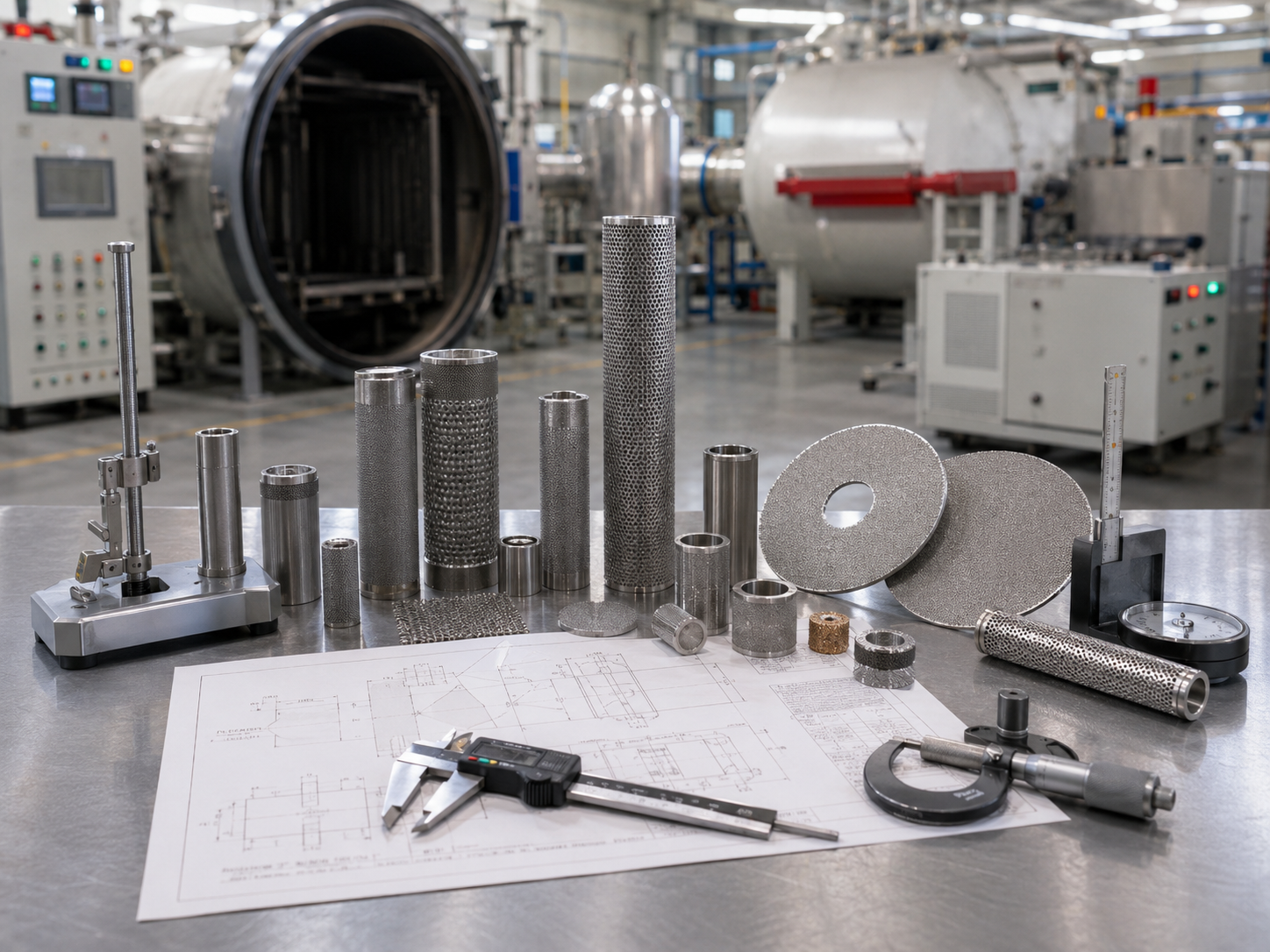
Drawing and dimensional review for custom and replacement components.
Request a Quote for Custom Pneumatic Mufflers
Send the thread or connection, dimensions, material, porous requirement, required exhaust airflow, allowable back pressure or pressure drop if specified, system pressure, working medium, temperature, installation details, quantity and drawing or sample information.
Related Bronze and Porous Metal Products
Compare pneumatic exhaust mufflers with related porous bronze filters, porous tubes and custom metal components.
Sintered Bronze Pneumatic Mufflers FAQ
Common engineering and purchasing questions when specifying a custom pneumatic muffler or silencer.
What information is needed to quote a pneumatic muffler?
Please provide thread or connection type, dimensions, material, porous requirement, airflow requirement, allowable back pressure or pressure drop if defined, working medium, system pressure, temperature, quantity and drawing details.
Can METAVOX manufacture custom sintered bronze pneumatic mufflers?
Yes. Drawings, samples, connection requirements, dimensions, porous structure, airflow conditions and equipment information can be evaluated before manufacturing feasibility and quotation are confirmed.
What is the difference between a pneumatic muffler and a pneumatic silencer?
The terms are commonly used for closely related pneumatic exhaust components. For custom manufacturing, connection, dimensions, airflow, allowable back pressure, porous structure and operating conditions are more important than the name alone.
Can a pneumatic muffler affect airflow or back pressure?
Yes. A porous exhaust element creates resistance to airflow. Excessive restriction can affect pneumatic equipment response, so the required airflow and maximum allowable exhaust back pressure should be considered together.
Is system pressure the same as pressure drop through the muffler?
No. System pressure describes the pneumatic line or equipment operating pressure. Pressure drop or exhaust back pressure describes the restriction created as air flows through the muffler. Both values may be required for proper selection.
Does pore size determine how many decibels a muffler will reduce?
No. Pore structure affects airflow resistance and contributes to exhaust behavior, but noise reduction also depends on airflow, equipment exhaust conditions, component geometry and acceptable back pressure. A pore grade alone should not be treated as a guaranteed dB value.
Is a pneumatic muffler the same as a breather vent?
No. A pneumatic muffler is primarily installed at a compressed-air exhaust point where discharged airflow and noise must be managed. A breather or vent component is primarily used for venting, pressure equalization and contaminant protection.
Can you manufacture replacement pneumatic mufflers from samples?
Yes. Replacement projects can be evaluated from old-part photographs, dimensions, drawings, thread details or physical samples before manufacturing feasibility and quotation are confirmed.
How should buyers send drawings or sample photos?
Submit the project through the Request a Quote page and email drawings, sample photographs or specification sheets to sales@industrialmetalfilters.com .
Need Custom Sintered Bronze Pneumatic Mufflers?
Send your drawing, sample, connection requirements, dimensions, required airflow, allowable exhaust restriction, working conditions and quantity. METAVOX will review manufacturing feasibility and provide a quotation.